
Resume Guide
- What Makes a Good Resume
- Resume Format Guidelines
- Essential Components
- Basic Tutorial Video
- What Recruiters Look For
- Resume Template Examples
What Makes a Good Resume?
For college students, a good resume bridges the gap between academic life and professional expectations by highlighting transferable skills—such as leadership, communication, and project management—gained through coursework, internships, and campus activities. Since professional experience may be limited, the focus should shift toward quantifiable accomplishments, like leading a student organization or managing a budget for an event, rather than just listing part-time job duties. The format must be clean, scannable, and error-free to help busy recruiters quickly spot potential, proving that while you may be entry-level, you are already results-driven and ready to contribute.
Resume Format Guidelines
- Length: One page.
- Margins: Between 0.5 and 1 inch on all sides.
- Bullet Points: Each work experience should have 3 to 4 bullet points. Keep each bullet point to one or two lines. Use the same bullet style throughout your resume. Be consistent: if one job has three bullet points, all other jobs should also have three bullet points.
- Order: Use reverse chronological format. Your most recent experience should be listed first.
- Font: Common fonts include Times New Roman. You may also use other readable, professional fonts such as Arial, Verdana, or Calibri.
- Font Size: Use 9 to 12 point for body text. Your name should be 16 to 20 point to grab attention.
- Font Style: Use bold, underline, or italics to draw attention to specific sections. Typically, bold your name and section headings, and italicize job titles.
- File Format: Save and submit your resume as a PDF file.

MEET OUR MENTORS
Don’t be afraid of asking for help!
Essential Components of a Resume
1. Contact Information
- Your full name (formatted in a larger, bold font)
- Professional email address (typically your first and last name)
- Phone number
- City and state (full address is no longer required)
- Link to LinkedIn profile or professional portfolio (if applicable)
2. Resume Summary or Objective
- A brief 2-3 sentence statement at the top summarizing who you are, what you are seeking, and why you are qualified. (e.g., “Motivated marketing student seeking an internship where strong social media skills and event planning experience can be utilized.”)
3. Education
- Name of your college or university
- Expected graduation date (month and year)
- Major and minor (if applicable)
- GPA (if it is 3.0 or higher)
- Relevant coursework (optional, but helpful if experience is light)
4. Experience
- Paid jobs (even if unrelated to your major)
- Internships
- Volunteer work
- Note: Each entry should include your title, the organization name, dates, and bullet points focused on achievements rather than duties.
5. Leadership and Activities
- Student government roles
- Club or organization leadership positions
- Sports teams
- Greek life involvement
- This section demonstrates soft skills like teamwork and initiative.
6. Skills
- Technical skills (Microsoft Office, Google Suite, Adobe Creative Cloud, social media platforms)
- Languages (list proficiency level, e.g., “Conversational Spanish”)
- Any certifications (First Aid, CPR, Google Analytics, etc.)
7. Projects (Optional but Highly Recommended)
- Class projects that produced real results
- Research assistance for a professor
- Presentations or papers you are proud of
- This helps fill experience gaps and shows practical application of knowledge.

BASIC TUTORIAL
Follow along with this step-by-step guide to build a clean, professional resume template from scratch. Perfect for beginners—no design experience needed!
*resume templates are provided further below for reference.*
What Recruiters Look For
1. Consistency (The “Career Story”)
Recruiters don’t just look at what you did; they look at the thread connecting your activities.
- What they check: If you claim to be passionate about marketing, do your clubs, electives, and internships all lean that way? Or is it a random mix of unrelated gigs?
- The Tip: Make sure your resume tells a story. If you want a job in sales, highlight the summer job where you upsold customers, even if it was just at a restaurant.
2. The “Growth Trajectory”
They look for evidence that you are coachable and improving.
- What they check: Did you stay in the same role for four years, or did you get promoted? Did you start as a “Member” of a club and become “Vice President”?
- The Tip: If you don’t have a formal promotion, show growth by adding new responsibilities to your bullet points over time.
3. Visual Hygiene (The “White Space” Test)
Before reading a single word, recruiters subconsciously judge the visual layout.
- What they check: Is the resume cluttered? Does it look like a wall of text that requires effort? Or does it have enough white space to look inviting and easy to read?
- The Tip: If your resume looks dense, they assume your thinking is dense. Leave margins and spacing so the reader can breathe.
4. Spelling That Spell-Check Misses
Software catches “teh” vs. “the,” but recruiters look for homophone errors.
- What they check: Mixing up “their/there/they’re,” “your/you’re,” or “effect/affect.” These errors suggest you didn’t actually read the document out loud or care enough to have someone else review it.
- The Tip: Read your resume backwards (start at the bottom and read word for word upwards) to catch these mistakes.


5. Soft Skills Hidden in Hard Facts
Anyone can list “Leadership” as a skill. Recruiters look for proof of it buried in your experience bullets.
- What they check: They look for the words behind the words. If you write “Organized a campus event for 200 students,” they see project management, budgeting, vendor negotiation, and communication—even if you didn’t list those exact words.
- The Tip: Don’t just tell them you have a skill; describe the situation where you used it.
6. Specificity Over Buzzwords
Recruiters are tired of reading “hard-working,” “detail-oriented,” and “team player.”
- What they check: They look for numbers, names, and results. Instead of “detail-oriented,” they want to see “Proofread 50-page thesis documents.”
- The Tip: Quantify everything. If you managed money, what was the budget size? If you helped customers, how many per shift?
7. Digital Footprint Alignment
Recruiters often look you up on LinkedIn immediately after reading your resume.
- What they check: They check for consistency. Does your LinkedIn headline match the job title you are applying for? Does your profile photo look professional? Is the information the same, or are there gaps?
- The Tip: Before applying, scrub your social media and ensure your LinkedIn profile is a carbon copy (or enhanced version) of your resume.
8. The “So What?” Factor
This is the biggest hidden filter. Recruiters read each bullet point and mentally ask, “So what? Why does this matter to me?”
- What they check: They are looking for the impact of your actions.
- Bad: “Attended club meetings.”
- Better: “Contributed ideas that led to the club’s new fundraising strategy.”
- The Tip: After every bullet point, add the phrase “…which resulted in…” If you can’t finish that sentence, the bullet point is just a duty, not an accomplishment.

RESUME TEMPLATE EXAMPLES
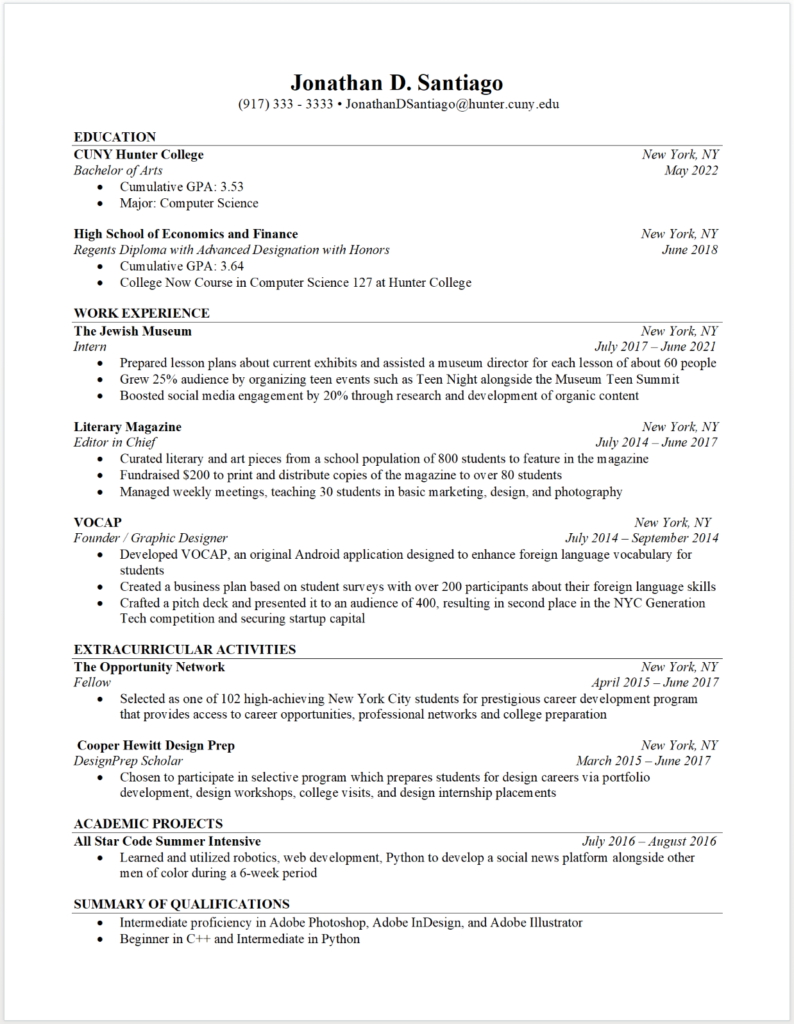
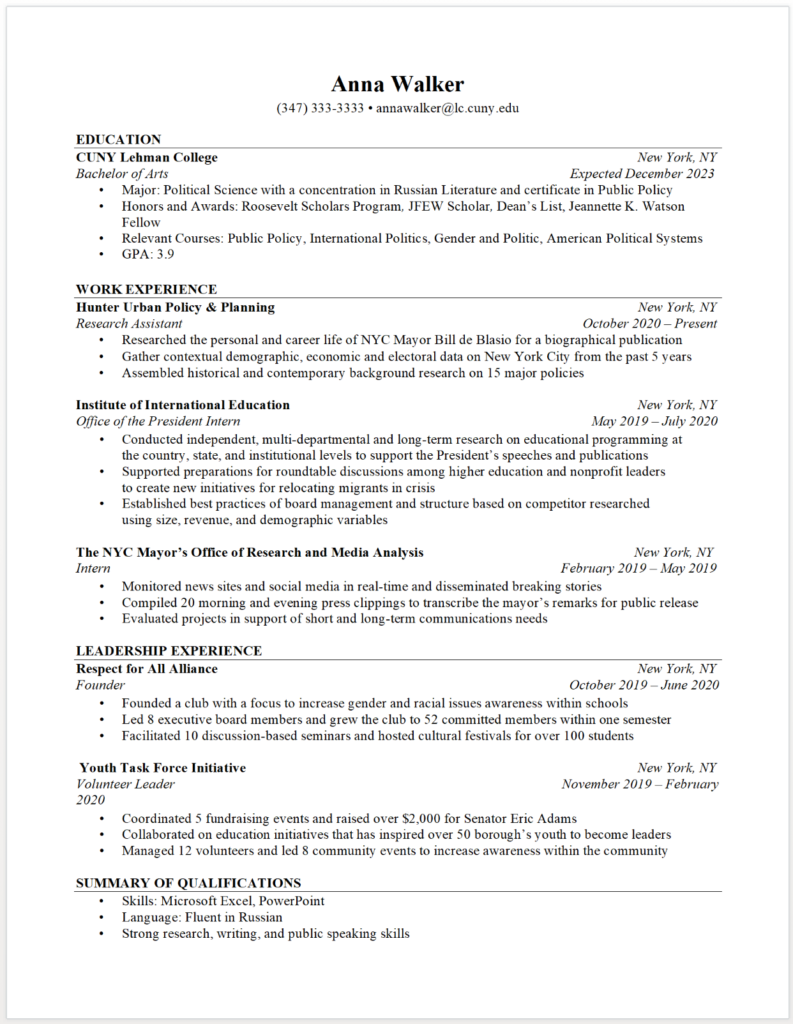
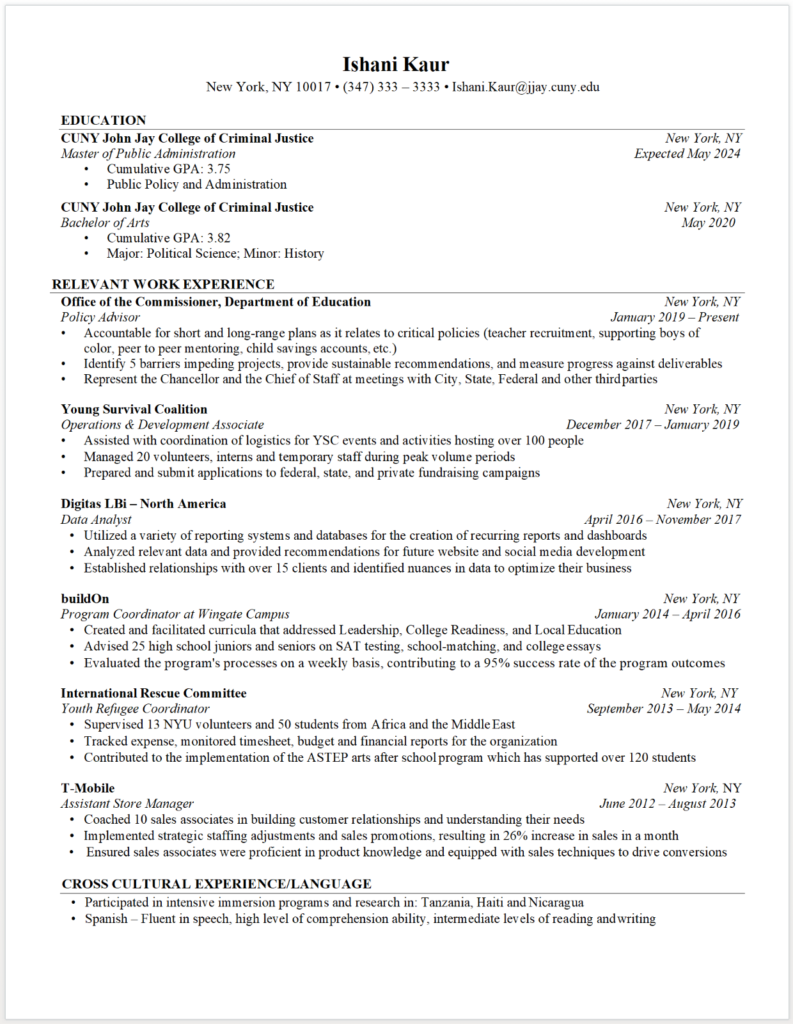
There are no wrong resume styles — just pick the one that best fits your experience and preference.
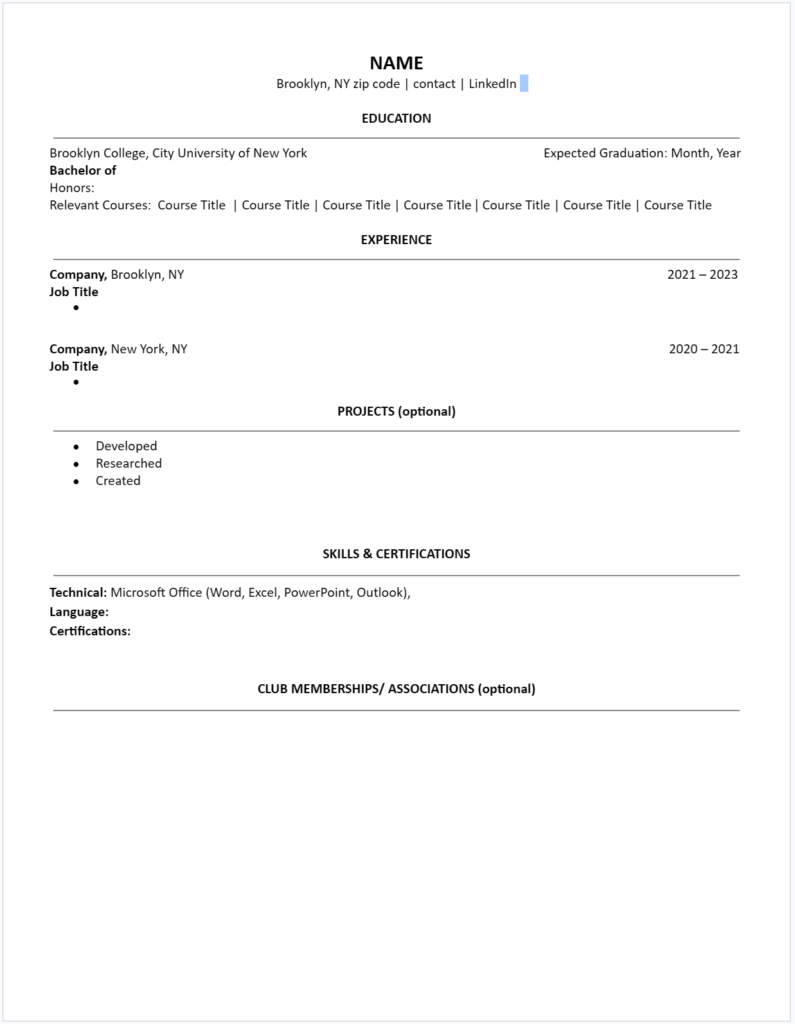
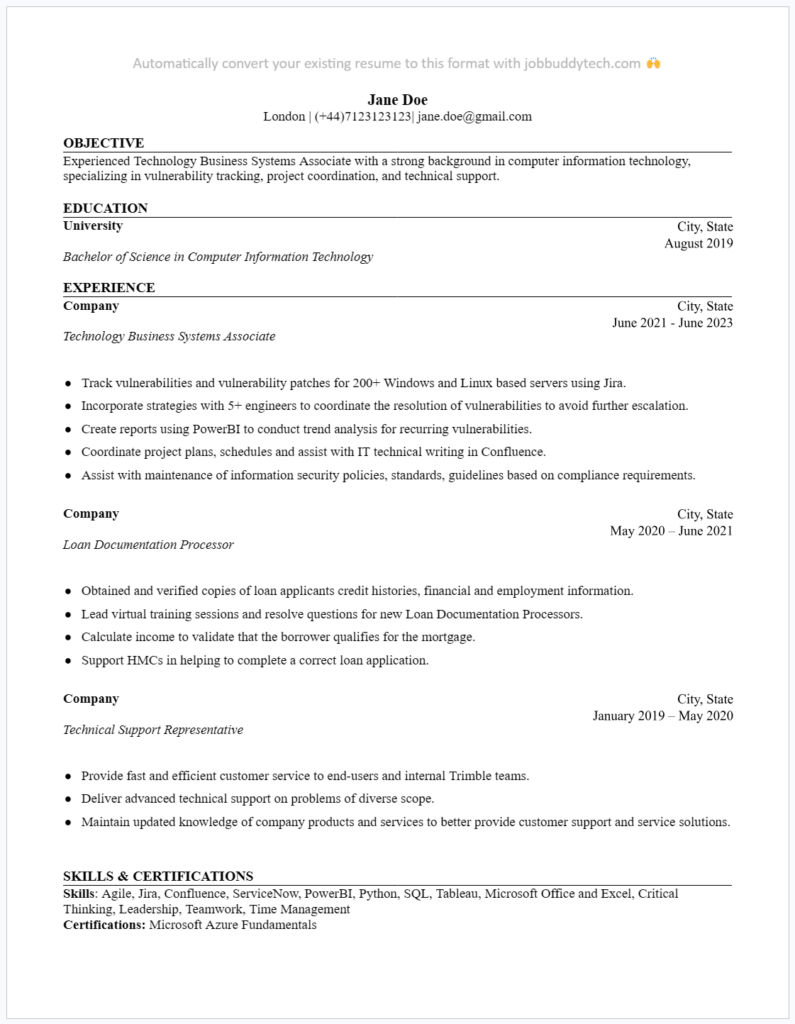
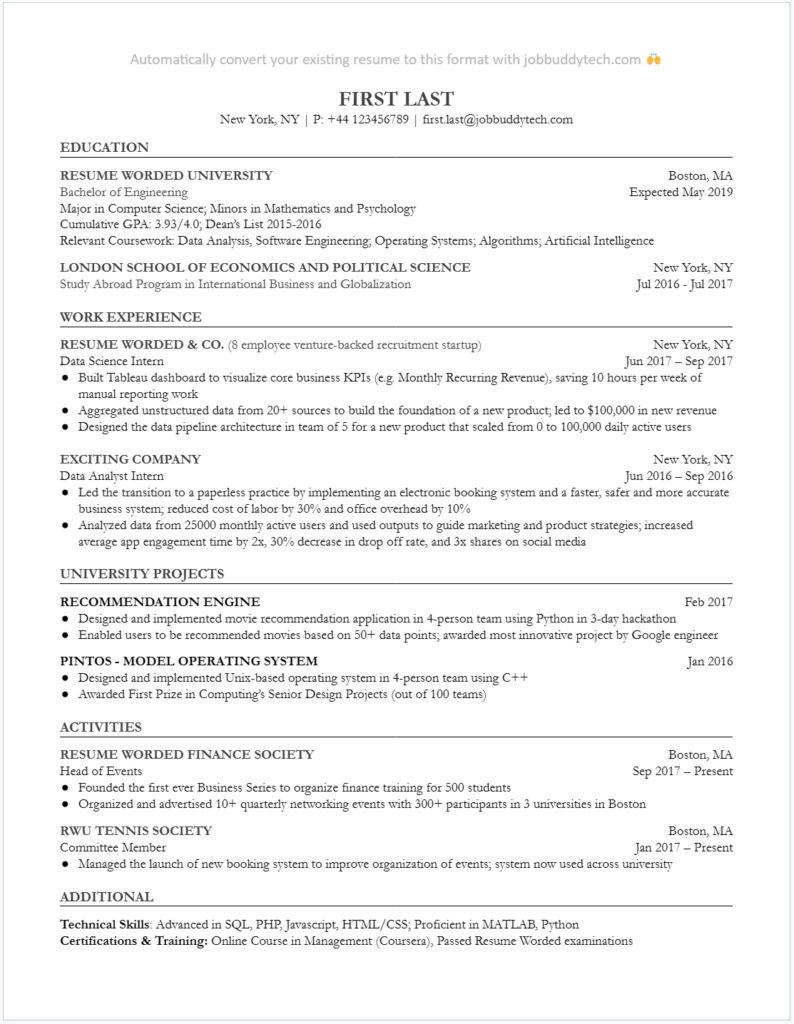
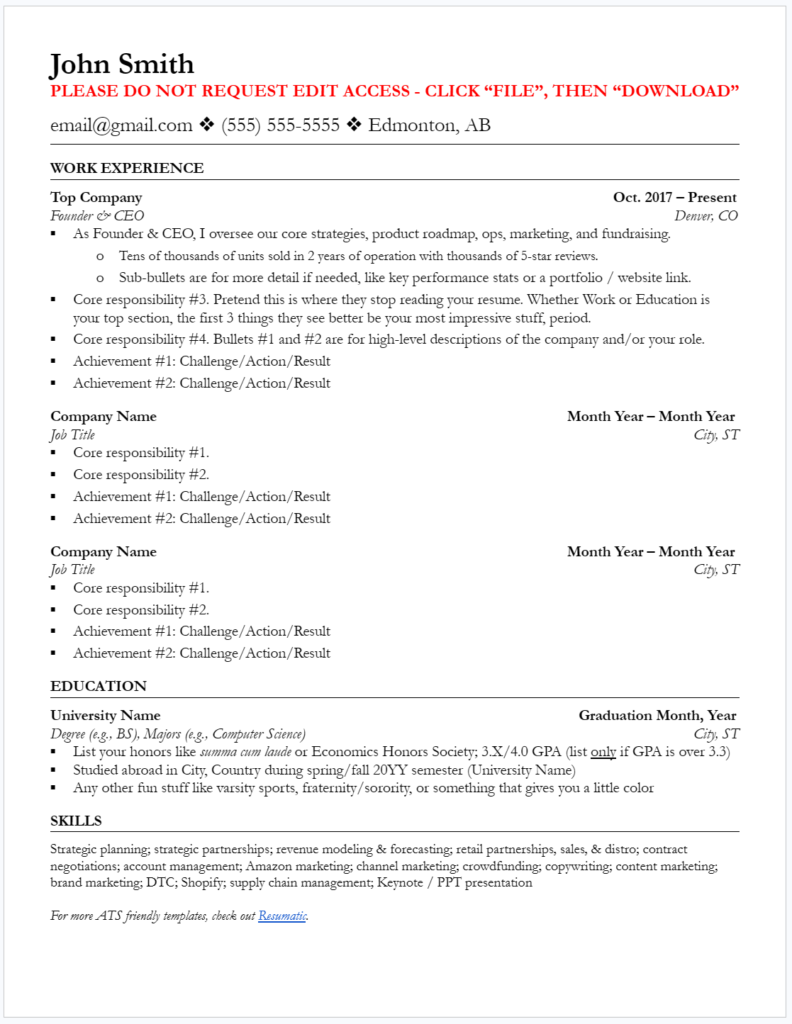
FRESHMAN | SENIOR | WORKING PROFESSIONAL
Below are examples of how your resume should evolve as you progress through each stage

BROOKLYN. ALL. IN.

